Tag Archive for women’s rights India

Tackle root causes of violence against women, UN rapporteur

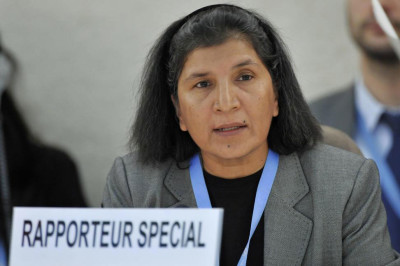
Rashida Manjoo

Report of Rashida Manjoo, Special Rapporteur for the United Nations urges India to end the culture of impunity and the inequality and discrimination so as to eliminate violence against women in India

By Team FI

Rashida Manjoo, Special Rapporteur for the United Nation for violence against women, its causes and consequences, in the conclusive statement of her fact-finding mission in India, stated that violence against women was both a cause and consequence of de facto inequality and discrimination.

Mandated by the Human Rights Council to gather information on the causes and consequences of violence against women and recommend measures to eliminate the same, Manjoo urged the Government of India to link the violence against women with the “other systems of oppression and discrimination prevalent within societies.” In her statement delivered on May 1st 2013, Manjoo pointed out that creating legislations and policies alone will not bring about the needed change, “if it is not implemented within a holistic approach that simultaneously targets the empowerment of women, social transformation, and the provision of remedies that ultimately address the continuum of discrimination and violence, and also the pervasive culture of impunity.”

In her mission in India, Manjoo held meetings in New Delhi, Rajasthan, Gujarat, Maharashtra and Manipur, and gathered information from other states, including Tamil Nadu. She met with civil and human rights activists, representatives of state and centre authorities, human rights institutions and United Nation agencies and shared the experiences of individual women who suffered from the loss of their human rights.
Manifestations of Violence.

Manjoo described the various manifestations of violence against women as per the information gathered as sexual violence, domestic violence, caste-based discrimination and violence, dowry related deaths, crimes in the name of honour, witch-hunting, sati, sexual harassment, violence against lesbian, bisexual, and transgender people, forced and/or early marriages, deprivation of access to water and basic sanitation, violence against women with disabilities, sexual and reproductive rights violations, sex selection practices, violence in custodial settings and violence in conflict situations, among others.

The statement also recognised information about the forms of violence experienced by women with disabilities “including sexual violence, forced sterilization and/or abortions and forced medication without their consent. In addition, their experience of discrimination, exclusion and marginalisation reinforces the need for greater attention and specificity.”

“One interlocutor described violence against women and girls as functioning on a continuum that spans the life-cycle from the womb to the tomb,” said Manjoo. She stated that these manifestations are strongly linked to women’s social and economic situation, and the deeply entrenched norms of patriarchy and cultural practices linked to notions of male superiority and female inferiority. “The current focus by state actors on preserving the unity of the family is manifested in the welfare/social approach and not in the human rights based approach. It does not take into consideration the nature of relationships based on power and powerlessness; of economic and emotional dependency; and also the use of culture, tradition and religion as a defence for abusive behaviour,” informed the statement.

While she welcomed the Centre’s speedy response after the Delhi rape incident in the appointment of the late Justice Verma committee, she regretted that the new amendments did not fully reflect the Verma Committee’s recommendations. Describing it as unfortunate, she stated that this was an opportunity was lost that could have addressed the de facto inequality and discrimination of women. “This development foreclosed the opportunity to establish a holistic and remedial framework which is underpinned by transformative norms and standards, including those relating to sexual and bodily integrity rights. Furthermore, the approach adopted fails to address the structural and root causes and consequences of violence against women,” said the statement.

Though the Protection of Women from Domestic Violence Act is a positive development, Manjoo pointed out that one of the recurring complaints availed to her was the discrepancy between the provisions of the laws and its effective implementation. “Despite provisions intended to offer legal, social and financial assistance to victims, many women are unable to register their complaints. Furthermore, prevention of violence, as a core due diligence obligation of the State, does not feature in the implementation of this law,” the statement said.

She reiterated that despite the recent amendments, “the unfortunate reality is that the rights of many women in India continue to be violated, with impunity as the norm, according to many submissions received.” Manjoo stated that women experience violence not just in situations of conflict, post-conflict, and displacement but also in situations of peace. “The denial of constitutional rights in general, and the violation of the rights of equality, dignity, bodily integrity, life and access to justice in particular, was a theme that was common in many testimonies,” she said.
Conflict-related Sexual Violence.

The statement also said that it in relation to conflict- related sexual violence, it was crucial to acknowledge that violations are perpetrated by both state and non-state actors. She pointed out that the Armed Forces (Special Powers) Act and the Armed Forces (Jammu and Kashmir) Special Powers Act (AFSPA) has mostly resulted in impunity for human rights violations broadly. “In the testimonies received, it was clear that the interpretation and implementation of this act, is eroding fundamental rights and freedoms – including freedom of movement, association and peaceful assembly, safety and security, dignity and bodily integrity rights, for women, in Jammu & Kashmir and in the North-Eastern States.” She said that it was unfortunate that peaceful and legitimate protests often elicited a military response.

The statement recognized that the victimization of women from the Dalit, Adivasi, other Scheduled castes, tribal and indigenous minorities. “Their reality is one where they exist at the bottom of the political, economic and social systems, and they experience some of the worst forms of discrimination and oppression – thereby perpetuating their socio-economic vulnerability across generations.”

Manjoo heard anguished stories of young women disappearing without a trace in Manipur. The police she was informed are generally apathetic and are likely to put the cause as elopement. However Manjoo expressed concern that these disappearances could be linked to sexual abuse, exploitation or trafficking.

“Generally tribal and indigenous women in the region are subjected to continued abuse, ill-treatment and acts of physical and sexual violence. They are denied access to healthcare and other necessary resources, due to the frequency of curfews and blockades imposed on citizens,” the statement informed.

Testimonies also highlighted child marriages and dowry-related practices, sorcery, honour killings, witch-hunting of women, and communal violence perpetrated against cultural and religious minorities. On the issue of communal violence, the statement remembered the women “who were beaten, stripped naked, burnt, raped and killed because of their religious identity, in the Gujarat massacre of 2002.”
Manjoo also expressed concern over the declining female sex ratio in India. “The implementation of (government) interventions is resulting in the policing of pregnancies through tracking/surveillance systems and is resulting in some cases in the denial of legal abortion rights, thereby violating the sexual and reproductive rights of women,” she said.

Workplace violence
The Special Rapporteur’s statement also marked the widespread sexual violence and harassment “perpetuated in public spaces, in the family or in the workplace. There is a generalized sense of insecurity in public spaces/amenities/transport facilities in particular, and women are often victims of different forms of sexual harassment and assault.”

The statement expressed dismay at the numerous violations faced by female domestic workers including sexual harassment by their employers. “Many of them, often migrant and unregistered women, work in servitude and even bondage, in frequently hostile environments; performing work that is undervalued, poorly regulated and low-paid,” said Manjoo.

Conclusion
The statement concluded with several recommendations which included the ones from human rights organisations.

The negative effect of personal status laws on the achievement of overall gender equality (CRC, CCPR, and CEDAW) was noted with the statement that such laws need to be reformed to ensure equality in law (CEDAW).
The statement has asked the government to ensure that all victims of domestic violence are able to benefit from the legislation on domestic violence. The Protection of Women from Domestic Violence Act and Section 498-A of the Indian Penal Code must be enforced effectively (CESCR).

The statement recommended the repealing of the Armed Forces (Special Powers) Act, the Public Safety Act and the National Security Act, and the Armed Forces (Jammu & Kashmir) Special Powers Act should be repealed, as it perpetuates impunity, and is widely used against Human Rights Defenders, .
The statement noted with grave concern the culture of impunity for violations of the rights of Dalit women, the failure to properly register and investigate complaints of violations against scheduled castes and tribes, the high rate of acquittals, the low conviction rates, and the alarming backlog of cases related to such atrocities. The statement expressed that the impact of mega-projects on the rights of women should be thoroughly studied, including their impact on tribal and rural communities, and safeguards instituted.

The statement exhorted the government to expedite the proposed Communal Violence (Prevention, Control and Rehabilitation of Victims) Bill, 2005 “with the incorporation of: sexual and gender-based crimes, including mass crimes against women perpetrated during communal violence; a comprehensive system of reparations for victims of such crimes; and gender-sensitive victim-centred procedural and evidentiary rules, and to ensure that inaction or complicity of State officials in communal violence be urgently addressed under this legislation.”

The comprehensive findings from Rashida Manjoo’s mission in India will be discussed in the report that will be presented to the United Nations Human Rights Council in June 2014.

Human Rights Abuse in India: An Unholy War on its People

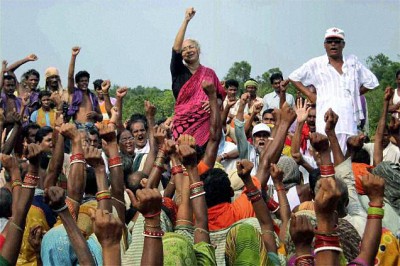
Medha Patkar

Human rights activists in India are deeply concerned about the shrinking democratic spaces with allegations of police/security forces intimidation, arbitrary arrest, imprisonment, and torture multiplying for the past several years

By Ramlath Kavil

On the human rights and civil rights front, things have been going wrong in the most populous democracy of the world for quite some time. Human rights organizations including Amnesty International and Human Rights Watch have been accusing the Indian State of blatant rights abuses. In May 2012, the Government of India itself declared in its Parliament that human rights violations in the country have increased by over 13,000 in the last three years and in 2011 alone some 94,630 such violations were reported.

The government stands accused in several cases of human rights violations in various courts of the country. The UN Human Rights Council’s Universal Periodic Review, May 2012, made 169 recommendations to India regarding human rights issues, which included the ratification of the UN Convention Against Torture and the UN Convention on Enforced Disappearances. India’s Attorney General who led the government delegation in Geneva, chose to play down the recommendations by saying, “India has the ability to self-correct.”

The  Unlawful Activities Prevention Act,1967 ( UAPA)  which entitles the police to arrest anybody without warrant on mere suspicion and its 2008 Amendment which allows the authorities to detain the accused upto 180 days of pre charge detention,  has also come under severe criticism. It may be recalled, a widely respected pediatrician and rights activist Dr. Binayak Sen was arrested in 2007 under this act, which prompted several international organizations and individuals including Noam Chomsky to come down heavily on the Indian Government. Dr. Sen was granted bail by the Supreme Court in April 2011.

The arrests and imprisonment of the tribal woman Soni Sori ,civil rights activist Seema Azad and now a young political cartoonist Aseem Trivedi offer yet another glimpse to how one of the fastest growing economies in the world is callous when it comes to checking its human rights record.

Soni Sori

Soni Sori, named by Amnesty International as a prisoner of conscience, hails from Chhattisgarh, one of India’s poorest regions where the banned radical left group Maoist (Naxalite) is said to wield considerable clout. Thousands of families have been caught between a deadly war fought by the State and the Maoists, both accused of violent tactics. Soni Sori’s family happened be one of them. According to rights activists, she and her family landed on the wrong side of both the Maoists and the state police, as they refused to operate as informers to either of them.

A warden in a state run girls hostel, Soni Sori’s ordeal with the law began in 2009 when the Chhattisgarh police arrested her 26-year-old nephew, a local journalist, Lingaram Kodopi. Sori and her family had claimed that the young journalist was arrested for speaking up against atrocities of Chhattisgarh police and the exploitations of the tribal people.

On September 9th 2011, Chhattisgarh’s Dantewada police charged Soni Sori, and her nephew Lingaram Kodopi of being ‘Naxalite accomplices’. Subsequently, both Kodopi and Sori were arrested.  The police accused them of being a conduit for extortion between the mining company Essar and the Maoist.  Both Sori and Essar have denied the allegation.

After two days in custodial interrogation, when Sori had to be produced in front of the Dantewada Magistrate on the 10th October 2011, the 37-year-old was so weak that she could not even get down from the police van.  A court clerk came to the police van, and the court passed an order without seeing her.

Soni Sori wrote to her lawyer about the brutal torture she was subjected to in custody at the orders of the then District Police Superintendent Ankit Garg, the controversial cop who won President’s gallantry award early this year.

Subsequently, the Supreme Court ordered an Independent medical examination to be conducted at NRS Medical College Hospital in Kolkatta. The report, presented in Court on 25th Nov, 2011 states three stones were found inserted deep inside Sori’s private parts and the MRI scan also showed annular tears on her spine.

Ever since the evidence of Sori’s custodial torture surfaced, women’s rights and human rights activists have been campaigning for her release and for an independent probe into the alleged custodial torture, including sexual violence. On March 8th International women’s day Amnesty International launched a campaign to release Soni Sori. As the Supreme Court is yet to decide on the petition for squashing the cases filed against her by the Chhattisgarh government, Soni Sori, the mother of three, is currently lodged in Raipur central Jail.

Seema Azad

The conviction of Seema Azad in June this year, a 36-year-old human rights activist and the Editor of a bi-monthly magazine adds another chapter to the country’s ongoing chronicle of silencing of dissent. Azad and her husband Vijay were arrested in early 2010 by the Uttar Pradesh Police and were accused of being members of the

From left to right- Soni Sori, Seema Azad and Aseem Trivedi

banned Communist Party of India (Maoist) and possessing banned Maoist literature. They were charged under various sections of IPC and also under the notorious Unlawful Activities (Prevention) Act. At the time of the arrest, Seema Azad was the State Secretary of People’s Union of Civil Liberties (PUCL), a national network of human rights activists.

After 2 years of trial on June 8th, 2012, the activist couple were convicted and sentenced to life imprisonment by an Allahabad Court. Human rights organizations severely criticized the conviction alleging that Azad and her husband were victimized for speaking on behalf of mining workers and farmers in the region. PUCL called the conviction of the couple for terrorism, unlawful activities, sedition and waging war against the state “a glaring travesty of justice,”, The same court, however, on August 6th granted bail to the couple.

Aseem Trivedi

Aseem Trivedi, an award winning political cartoonist was arrested in Mumbai on 8th September 2012 for sedition under section 129 A of Indian Penal code. He was also charged under the IT Act and the 1971 National Emblem Act. Trivedi is arrested for drawing Parliament as a commode and showing the national emblem with bloodthirsty wolves instead of lions. Trivedi, well known for his series of anti corruption cartoons, launched Cartoon Against Corruption, a website in order to support the anti corruption movement in India in 2011. However, within 24 hours of its launch, the Mumbai Crime Branch blocked its content. Later in 2012 Trivedi started, Save Your Voice, a movement against internet censorship in the country.  Trivedi has been sent to police custody till September 16.

“Such cases show that civil and human rights in India are in a moment of profound crisis. Many of these arrests and violations have deep connections to the growing corporatization of India’s mineral-rich land and resources.  This expanded development has displaced many hill and village populations and polluted many of their habitats” says Lena Ganesh, a Delhi-based gender and human rights activist.

Since 2005 many big corporations like Mittal, Jindal, Posco, Vedanta etc have signed MOUs for mining activities in the mineral rich Indian states of Orissa, Chhattisgarh, Jharkand etc. These regions have also witnessed extreme opposition from locals against corporatization of the forest land. The Indian government argues that “the rise of extreme leftist outfits in the regions rich in minerals has badly affected investments.” However, rights activists feel the unrest among the locals in these regions is widespread and independent of ‘insurgents’. By attributing the disaffection to ‘motivated parties’, the government and the corporations are walking a tight-rope over a political mine field.

The fact is, as the number of human rights violations grows, the dissent also grows.  In a country where one third of the world’s poor live, silencing the voice of the distress is an absolute impossibility. Threats of arrest and imprisonment would only alienate the vast majority of its 1.2 billion population. Let us not forget, it is the country that gave birth to one of the greatest non violent political movements, a movement that taught the British Empire that no Kingdom can rise above its people’s civil liberties.

Featured photo courtesy: PTI

India Ranked Worst G20 Country for Women

Indian women status

Gender experts responding to a global poll rank India as the worst for women among the G-20 countries

By Team FI

India has been ranked the worst country for women, amongst the G20, by a global poll conducted by Trust Law, a legal news service run by Thomson Reuters Foundation. Trust Law asked 370 gender experts from 63 countries – mainly aid professionals, academics, health workers, policymakers and journalists – to rank the 19 countries of the G20 in terms of the overall best and worst to be a woman in.

The experts opine that the poll shows the grim ground reality of a woman’s life despite the presence of rights granted by the constitution and judiciary laws. The poll has ranked Canada first considering factors like women’s safety, access to health care and education. Germany has landed the second rank, with Britain following. These are followed by Australia, France, United States, Japan, Italy, Argentina, South Korea, Brazil, Turkey, Russia, China, Mexico, South Africa, Indonesia, and Saudi Arabia and in the 19th position is India. The EU, which is a member of the G20 as an economic grouping along with several of its constituent countries, was not included in the survey.

While the poll was based on perceptions and not statistics, U.N. data supports the experts’ views. According to the UN Population Fund, India recorded 56,000 maternal deaths in 2010, perhaps an outcome of diminishing public health care system in India. According to a study by  International Center for Research on Women (2010) 44.5% girls were married before 19 years of age. UNICEF’s Global Report Card on Adolescents 2012, reveals that 57% adolescent boys and 53% of girls in India think it is justifiable for a man to beat his wife.

G20 Women status map

Courtesy: Thomson Reuters Foundation

In Saudi Arabia, factors like – women are not allowed to drive, women were given limited voting right only last year, 64.6% women with tertiary education are unemployed, the fact that the law against violence against women lacks teeth because a man’s testimony is worth that of two women in court – placed the oil rich country as the second worst. China which has one of the highest male to female sex ratios at birth is ranked 14, just below Russia. According to the 2008 World Bank report, in China, with a culture that prefers boys over girls, 1.09 million girls dead or missing at birth due to infanticide.

However, the poll has been criticized by some stating that it promoted popular but inaccurate perceptions. Dr. Kathleen Lahey, of the Queen’s University, Canada, points out that the countries of Germany, Argentina, Australia and Brazil have a woman as a head of state or prime minister and therefore they are perceived to be a progressive society. She points out however that in Germany, only 12.5% board members of publicly listed companies are women and there is 21.6 % gender pay gap for full time workers while in Brazil, only 9 per cent of MPs are women.

The Trust Law poll has ranked the United States in sixth place overall. The increasing number of women who have no access to affordable health care and the recently reignited reproductive rights debate placed US below other western countries like Germany, UK, France, and Australia. Terry O’Neill, president of the Washington-based National Organization for Women, is surprised that US has got the sixth place pointing out to the Globe and Mail that the U.S. is one of only seven countries that haven’t ratified the UN’s Convention on the Elimination of All Forms of Discrimination against Women.

The G-20, which refers to the informal group of 20 major economies in the world – 19 countries plus the European Union, is all set for its annual summit being held this year in Mexico on June 18-19. The poll which precedes the summit has experts opine that it is more vital than ever to protect women’s freedoms at a time of political upheaval in several parts of the world.  “Times of political transition, we’ve learned the hard way, can also be times of fragility, and when rights for women and girls can be rolled back instead of advanced,” says Minky Worden, director of global initiatives at Human Rights Watch.


Outrage over President’s medal to police chief

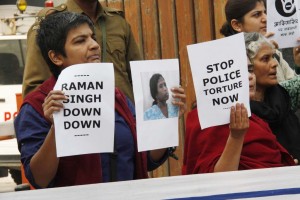
Women's groups protest in Delhi

By Team FI

Women’s Groups in India have condemned the government awarding the President’s Medal to a senior police official, Ankit Garg who is alleged to have supervised Soni Sori’s custodial torture.

Ankit Garg, Superintendent of Police, Dantewada, Chhattisgarh, India has been named by the Adivasi school teacher, Soni Sori, in several lettersto the Supreme Court, of ordering and supervising her torture and sexual violence against her, on the night of October 8th, 2011 when she was in his custody at the Dantewada police station.

Ankit Garg, Superintendent of Police, Dantewada

In a case which is now before the Supreme Court, Soni Sori has written that while she was in police custody in Dantewada police station, she was stripped before the Superintendent of Police, Ankit Garg, and given electric shocks under his directions.  Furthermore, he ordered three police personnel to “punish her” by sexually torturing her for disobeying his commands to name well-known social activists, such as Swami Agnivesh and Medha Patkar, as Naxal supporters.

An independent medical examination carried out by the Government hospital in Kolkata under the direction of the Supreme Court has confirmed her sexual torture by recovering stones embedded in her private parts.  This prompted the Supreme Court to reach the conclusion that she is clearly unsafe within the reach of Dantewada police, and needs to be transferred to the Raipur Central prison.

Women’s rights activists believe that this is no longer a case of mere allegations against the police, but there is also solid evidence by a government medical team to support her charges.

As Soni Sori, the victim of this heinous torture languishes in the Raipur Central Jail, with a deteriorating health condition, and waits for her case to be listed in the Supreme Court, women’s teams who have been taking up the case of her torture have been refused permission to meet her. She is still under the custody of the same state police has that inflicted this torture on her.

There can be no excuse for torture and sexual violence in the name of anti-Naxal or counter-insurgency operations. To confer awards on a person accused of such heinous acts diminishes the respect and honour usually associated with a gallantry award.

excerpts from the press statement issued by Women Against Sexual Violence and State Repression (WSS), India.