Tag Archive for Women’s groups

NGOisation of the Women’s Movement: Survival vs autonomy

Indian women

NGO-isation has engulfed all of civil society organsing in India, including the women’s movement. While it has strengthened many groups’ institutional position and enabled a wider outreach, feminist solidarity and feminist ideology seem to have taken a back seat

By Vibhuti Patel

NGO-isation clearly represents the growing dominance of a certain organisational form that is different from the early consciousness-raising organisations and also different from the mass organising that women have been very good at. NGO-isation is not particular to women though. The impact of NGO-isation varies depending on the resources, level of operation and the organisational motives behind adopting the NGO model.

Historical Backdrop

When social movements of 1970s and 1980s started fragmenting and losing their mass base due to issue based narrow struggles, formation of special interest groups and cooption of articulate, urbane, English knowing, professionally qualified activists and leaders of peoples’ movement: peasant movement, workers’ movement, Dalit movement, youth movement, women’s movement and tribal movement into power structures, NGO-isation process began. Initially, they were called non-party political formations or voluntary organisations. In course of time they developed into legalised entities as registered societies, public trusts, non-profit or pro-profit trusts supported by local, corporate, state or foreign funding institutions.

There was an understanding that in the non- government organisations level of motivation was high, they were non-corrupt and were free from nepotism and red-tapism.  During 1980s and 1990s, the NGOs were applauded by UN bodies as rooted in ‘the local reality’, ‘full of idealism’ and ‘bottom up’ and ‘participatory’ in their approach. Many liberal and socialist thinkers also declared them as third force for social transformation, first two being Government bodies and political parties.

Beyond Guilt-Tripping

New awareness among the funding institutions about mis-utilisation of funding by government agencies was as a result of intense debate on corruption, leakage and misappropriation of funding in the Asian, Latin American and African countries during 1950-1980. In the early 1990s, there was a fear that the global funding might get diverted to East European countries that was culturally closer to the western world and had faced massive economic and political crisis due to collapse of Soviet Union.

This debate in the development studies circle brought massive changes in the functioning of the social movements in the post colonial countries which were subsidised by the outside funding. Initially, activists and experts from the minority communities and women were forced to accept foreign funding as they were marginalised in their own countries. Rest of the social movements derived benefits of these funding without publicly acknowledging the source.

Structural Adjustment Programme and stabilisation policies resulted into massive reduction in the state funding. Even the mainstream institutions and organisations started turning to foreign funding. New dialogue with the funders based on mutual respect has helped to get rid of the anxiety that the developing world would be left out by the aid agencies.  Induction of highly qualified professionals from developing countries as consultants to screen the proposals for funding is supposed to have reduced wastage and vested interest.

NGO-isation impacts on smaller women’s organisations operating at the local level in terms of an expansion of structure, loss of autonomy, erosion of agenda setting power and a prioritisation of accountability towards donors. However, some national-level women’s organisations have been able to manage the process through strategically mobilising resources and prioritising own agendas, thus retaining their feminist character.

Indian women's movement

Destroy dowry not daughters. A protest in 1986, Photo courtesy: Vibhuti Patel

At a wider level, the NGO-isation process has led to a blurring of the boundaries between the gender and development agenda and feminist discourses. This blurring of boundaries created opportunities for raising women’s rights issues at different levels, but led perhaps to a generational shift in how younger women engage with gender equity issues.

NGO-isation has impacted structure, agenda, autonomy, agency and accountability of different types of women’s/feminist organisations. Adoption of service-delivery models promoted by the NGOs and concerns over losing the feminist political agenda has taken away steam from the women’s liberation movement. Influence of management institutions have changed vocabulary of women’s NGOs who talk in terms of SWOT, OD, skill Development, value for money, value addition, USP, beneficiary and benefactor.

Feminist solidarity and feminist ideology have taken a back seat as in a neoliberal backdrop each one is competing for patronage, travel grant and institutional funding and perpetually insecure about poaching of talented staff and diversion of funding. ‘Contact is capital’, ‘Network for Power’ and ‘Concentration and Centralisation of Resources’ have been the mantra of NGO-isation. In this culture; spontaneity, trust, solidarity, collective efforts have been replaced by calculated moves, secrecy, individualism and atomized existence among women’s groups.

The only positive fall out of NGO-isation process is that, the feminist organisations have been able to strengthen their institutional positions (recognition by the mainstream bodies, consultancy, training centres, building, staff, and financial security) and create a wider reach through the links they have developed through collaboration on NGO projects. Moreover, women’s organizations were forced to rethink their mobilisation strategies and discourses, as a larger number of educationally qualified younger women and men engage with the gender and development projects implemented by NGOs.

Vibhuti Patel is active in the women’s movement in India since 1972 and currently teaching at SNDT women’s University, Mumbai.

The Soni Sori Case: A Travesty of Justice

Soni Sori case Feminists India

By Team FI

The Soni Sori case is an unconscionable example of how India, the largest democracy in the world has often failed to check its growing human rights violations record.

For Soni Sori, this International Women’s Day is going to be just another day in Raipur jail, spent in pain and discomfort that constantly reminds her of the custodial torture and injustice meted out to her by the Chhattisgarh Police.

Soni Sori, an adivasi school teacher and the warden of a government-run school for tribal children in Jabeli, Dantewada, was arrested in Delhi on October 4th 2011. She has repeatedly claimed that the Chhattisgarh Police had been harassing her ever since she refused to be an informer against the Maoists, and even attempted to kill her after they arrested her nephew, Lingaram Kodopi, an outspoken journalist in September, 2011.

Charged under the Unlawful Activities Prevention Act (UAPA) among others, Kodopi and Soni have both been accused in several other cases of ‘Maoist violence’ and as alleged go-betweens for a bribe by Essar to the Maoists.

Fearing for her life, Soni Sori fled to Delhi to seek legal help. She spoke of her travails to the media including the news magazine Tehelka, but was arrested before she could take legal action.  She pleaded with the Saket District Court and the Delhi High Court to be kept in custody in Delhi until she could file her petition in the Supreme Court.  However, she was remanded to the custody of Chhattisgarh Police, albeit with explicit directions to ensure her safety and an order that a report be filed before the Delhi High Court, outlining steps taken to keep her safe.

After two days in custody, when Soni Sori had to be produced in front of the Dantewada Magistrate on the 10th October, she was in such a bad condition that she could not get down from the police van and go to the courtroom. A court clerk came to the police van and yet, it is wrongly recorded that she was produced before the Magistrate who remanded her to judicial custody for 14 days.

The police claimed ‘she slipped in the bathroom and had hurt her head’. The examining doctor at the District Hospital said ‘she was brought in unconscious, the X-ray showed injuries on her head and back, and black marks were observed on her fingertips’ – indicating she had received electric shocks. Initially Soni Sori herself said that she had fallen in the bathroom, but later retracted saying she had been threatened by the police that if she spoke of her torture, her brother, the sole caretaker of her three children, would be arrested.

Subsequently, in her statements to relatives and in a letter to the Supreme Court, Soni Sori said, “After repeatedly giving me electric shocks, my clothes were taken off. I was made to stand naked. SP Ankit Garg was watching me; sitting on his chair (…) he abused me in filthy language and humiliated me. After some time, he went out and (…) sent three boys. (They) started molesting me and I fell after they pushed me. Then they put things inside my body in a brutal manner. I couldn’t bear the pain and I was almost unconscious. After a long time, I regained consciousness (…) by then, it was already morning.”

Superintendent of Police, Ankit Garg

In response to a petition filed in the Supreme Court, a three-Judge Bench ordered an independent medical examination in NRS Medical College Hospital in Kolkata. The report, presented in Court on 25th Nov, 2011 states three stones were found inserted deep inside her private parts, which were the primary cause of her abdominal pain. The MRI scan also shows annular tears on her spine. Yet shockingly, none of the three hospitals in Chhattisgarh which ‘examined her’ found inflammation in her private parts, the stones lodged in her vagina and rectum.

Since then Soni has petitioned the Supreme Court for urgent medical attention and to be moved back to Jagdalpur Jail so that her frail body can be spared the torturous travel to Dantewada for every hearing on the numerous cases filed against her. Yet the Supreme Court on December 1, 2011 ordered that she remain in the custody in Chhattisgarh for an additional period of 55 days until the next hearing on 25th January, 2012. She is still lodged there while she waits for a hearing and so-called ‘urgent’ medical attention.

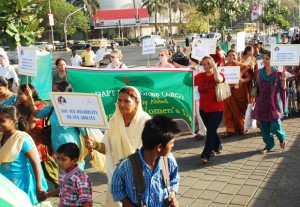
Ever since the evidence of her custodial torture surfaced, women’s groups, civil rights groups, civil society organizations, individuals and many others have been trying to work towards ensure her safety — protesting against the Chhattisgarh Police, demanding justice and action from the Chief Minister, seeking inquiry by the National Human Rights Commission, the National Commission of Women and so on.

Soni Sori Feminists India

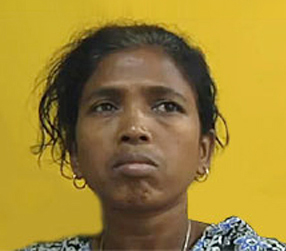
Soni Sori: photo by Garima Jain-Tehelka

On December 21st, 2012, an open letter to the Supreme Court was issued urging the court to “give serious attention to the grave violation of the rights of a tribal woman undertrial, the facts and documents regarding which are pending before the Supreme Court in the case.”

The letter was signed by prominent personalities like Aruna Roy,Uma Chakravarti, Brinda Karat, Romila Thapar etc along with scores of other doctors, educationists, academicians, students and individuals.  Joining them were 69 civil society groups and organisations working on women’s issues, health issues, civil and democratic rights, and worker’s issues from across the country.

On the 12th-13th January, 2012 a delegation of women’s groups went to meet Soni Sori in Central Jail, Raipur but were denied permission. They met the Chairpersons of both the State Human Rights Commission and the State Women’s Commission, both of whom said that the denial of permission did not constitute any violation of Soni’s rights. Additionally, the SCW said that since this was a `naxalite‘ case, caution was needed.

No step has been taken against any of the errant police officers – even Constable Mankar, who was recorded by Tehelka admitting that false cases had been registered against Soni and Kodopi. As for SP Ankit Garg, he has been awarded a Gallantry Award by the President on Jan 26, 2012. This news evoked unequivocal condemnation from women’s groups in the country.

On 29 January, activists held a hunger fast in Delhi in order to express solidarity with her plight.

Charges against Soni Sori

Soni Sori has multiple cases against her—from being a participant in a Naxalite raid at a Congress worker’s house, to acting as an intermediary for the Maoists—and each of the charge sheets show her as an “absconder”… this, at a time, when Soni Sori was not only regularly attending to her duties, but had also met with police authorities to complain about her own harassment by the Maoists: her father has been shot by the Maoists, at the time during which she was allegedly working with them.

With all so-called autonomous bodies like the human rights and women’s commissions keeping their hands off the case under the pretext of them being ‘sub-judice’, justice continues to elude Soni Sori. And it will continue to do so as long as the nation continues to delude itself about what constitutes a human rights violation.

From Irom Sharmila to Soni Sori, these are the faces that should haunt the Indian conscience, today.