Tag Archive for Violence against women

Tackle root causes of violence against women, UN rapporteur

Rashida Manjoo

Report of Rashida Manjoo, Special Rapporteur for the United Nations urges India to end the culture of impunity and the inequality and discrimination so as to eliminate violence against women in India

By Team FI

Rashida Manjoo, Special Rapporteur for the United Nation for violence against women, its causes and consequences, in the conclusive statement of her fact-finding mission in India, stated that violence against women was both a cause and consequence of de facto inequality and discrimination.

Mandated by the Human Rights Council to gather information on the causes and consequences of violence against women and recommend measures to eliminate the same, Manjoo urged the Government of India to link the violence against women with the “other systems of oppression and discrimination prevalent within societies.” In her statement delivered on May 1st 2013, Manjoo pointed out that creating legislations and policies alone will not bring about the needed change, “if it is not implemented within a holistic approach that simultaneously targets the empowerment of women, social transformation, and the provision of remedies that ultimately address the continuum of discrimination and violence, and also the pervasive culture of impunity.”

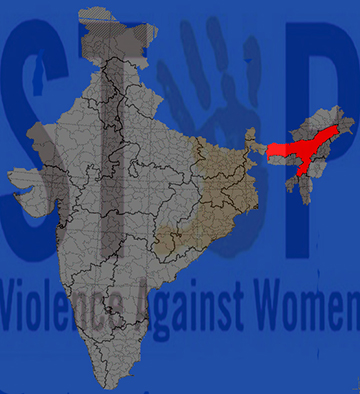
In her mission in India, Manjoo held meetings in New Delhi, Rajasthan, Gujarat, Maharashtra and Manipur, and gathered information from other states, including Tamil Nadu. She met with civil and human rights activists, representatives of state and centre authorities, human rights institutions and United Nation agencies and shared the experiences of individual women who suffered from the loss of their human rights.
Manifestations of Violence.

Manjoo described the various manifestations of violence against women as per the information gathered as sexual violence, domestic violence, caste-based discrimination and violence, dowry related deaths, crimes in the name of honour, witch-hunting, sati, sexual harassment, violence against lesbian, bisexual, and transgender people, forced and/or early marriages, deprivation of access to water and basic sanitation, violence against women with disabilities, sexual and reproductive rights violations, sex selection practices, violence in custodial settings and violence in conflict situations, among others.

The statement also recognised information about the forms of violence experienced by women with disabilities “including sexual violence, forced sterilization and/or abortions and forced medication without their consent. In addition, their experience of discrimination, exclusion and marginalisation reinforces the need for greater attention and specificity.”

“One interlocutor described violence against women and girls as functioning on a continuum that spans the life-cycle from the womb to the tomb,” said Manjoo. She stated that these manifestations are strongly linked to women’s social and economic situation, and the deeply entrenched norms of patriarchy and cultural practices linked to notions of male superiority and female inferiority. “The current focus by state actors on preserving the unity of the family is manifested in the welfare/social approach and not in the human rights based approach. It does not take into consideration the nature of relationships based on power and powerlessness; of economic and emotional dependency; and also the use of culture, tradition and religion as a defence for abusive behaviour,” informed the statement.

While she welcomed the Centre’s speedy response after the Delhi rape incident in the appointment of the late Justice Verma committee, she regretted that the new amendments did not fully reflect the Verma Committee’s recommendations. Describing it as unfortunate, she stated that this was an opportunity was lost that could have addressed the de facto inequality and discrimination of women. “This development foreclosed the opportunity to establish a holistic and remedial framework which is underpinned by transformative norms and standards, including those relating to sexual and bodily integrity rights. Furthermore, the approach adopted fails to address the structural and root causes and consequences of violence against women,” said the statement.

Though the Protection of Women from Domestic Violence Act is a positive development, Manjoo pointed out that one of the recurring complaints availed to her was the discrepancy between the provisions of the laws and its effective implementation. “Despite provisions intended to offer legal, social and financial assistance to victims, many women are unable to register their complaints. Furthermore, prevention of violence, as a core due diligence obligation of the State, does not feature in the implementation of this law,” the statement said.

She reiterated that despite the recent amendments, “the unfortunate reality is that the rights of many women in India continue to be violated, with impunity as the norm, according to many submissions received.” Manjoo stated that women experience violence not just in situations of conflict, post-conflict, and displacement but also in situations of peace. “The denial of constitutional rights in general, and the violation of the rights of equality, dignity, bodily integrity, life and access to justice in particular, was a theme that was common in many testimonies,” she said.
Conflict-related Sexual Violence.

The statement also said that it in relation to conflict- related sexual violence, it was crucial to acknowledge that violations are perpetrated by both state and non-state actors. She pointed out that the Armed Forces (Special Powers) Act and the Armed Forces (Jammu and Kashmir) Special Powers Act (AFSPA) has mostly resulted in impunity for human rights violations broadly. “In the testimonies received, it was clear that the interpretation and implementation of this act, is eroding fundamental rights and freedoms – including freedom of movement, association and peaceful assembly, safety and security, dignity and bodily integrity rights, for women, in Jammu & Kashmir and in the North-Eastern States.” She said that it was unfortunate that peaceful and legitimate protests often elicited a military response.

The statement recognized that the victimization of women from the Dalit, Adivasi, other Scheduled castes, tribal and indigenous minorities. “Their reality is one where they exist at the bottom of the political, economic and social systems, and they experience some of the worst forms of discrimination and oppression – thereby perpetuating their socio-economic vulnerability across generations.”

Manjoo heard anguished stories of young women disappearing without a trace in Manipur. The police she was informed are generally apathetic and are likely to put the cause as elopement. However Manjoo expressed concern that these disappearances could be linked to sexual abuse, exploitation or trafficking.

“Generally tribal and indigenous women in the region are subjected to continued abuse, ill-treatment and acts of physical and sexual violence. They are denied access to healthcare and other necessary resources, due to the frequency of curfews and blockades imposed on citizens,” the statement informed.

Testimonies also highlighted child marriages and dowry-related practices, sorcery, honour killings, witch-hunting of women, and communal violence perpetrated against cultural and religious minorities. On the issue of communal violence, the statement remembered the women “who were beaten, stripped naked, burnt, raped and killed because of their religious identity, in the Gujarat massacre of 2002.”
Manjoo also expressed concern over the declining female sex ratio in India. “The implementation of (government) interventions is resulting in the policing of pregnancies through tracking/surveillance systems and is resulting in some cases in the denial of legal abortion rights, thereby violating the sexual and reproductive rights of women,” she said.

Workplace violence
The Special Rapporteur’s statement also marked the widespread sexual violence and harassment “perpetuated in public spaces, in the family or in the workplace. There is a generalized sense of insecurity in public spaces/amenities/transport facilities in particular, and women are often victims of different forms of sexual harassment and assault.”

The statement expressed dismay at the numerous violations faced by female domestic workers including sexual harassment by their employers. “Many of them, often migrant and unregistered women, work in servitude and even bondage, in frequently hostile environments; performing work that is undervalued, poorly regulated and low-paid,” said Manjoo.

Conclusion
The statement concluded with several recommendations which included the ones from human rights organisations.

The negative effect of personal status laws on the achievement of overall gender equality (CRC, CCPR, and CEDAW) was noted with the statement that such laws need to be reformed to ensure equality in law (CEDAW).
The statement has asked the government to ensure that all victims of domestic violence are able to benefit from the legislation on domestic violence. The Protection of Women from Domestic Violence Act and Section 498-A of the Indian Penal Code must be enforced effectively (CESCR).

The statement recommended the repealing of the Armed Forces (Special Powers) Act, the Public Safety Act and the National Security Act, and the Armed Forces (Jammu & Kashmir) Special Powers Act should be repealed, as it perpetuates impunity, and is widely used against Human Rights Defenders, .
The statement noted with grave concern the culture of impunity for violations of the rights of Dalit women, the failure to properly register and investigate complaints of violations against scheduled castes and tribes, the high rate of acquittals, the low conviction rates, and the alarming backlog of cases related to such atrocities. The statement expressed that the impact of mega-projects on the rights of women should be thoroughly studied, including their impact on tribal and rural communities, and safeguards instituted.

The statement exhorted the government to expedite the proposed Communal Violence (Prevention, Control and Rehabilitation of Victims) Bill, 2005 “with the incorporation of: sexual and gender-based crimes, including mass crimes against women perpetrated during communal violence; a comprehensive system of reparations for victims of such crimes; and gender-sensitive victim-centred procedural and evidentiary rules, and to ensure that inaction or complicity of State officials in communal violence be urgently addressed under this legislation.”

The comprehensive findings from Rashida Manjoo’s mission in India will be discussed in the report that will be presented to the United Nations Human Rights Council in June 2014.

Activists call CLA bill historic but slam tenor of its parliamentary debate

Anti rape protest India

Opinions expressed by many of the members of parliament during the debate have exposed their misogynistic attitudes towards women

By Team FI

Women’s rights activists in India, in a press release issued yesterday, have termed the passing of the Criminal Law (Amendment) Bill, 2013 in Parliament as “historic” and a step forward in the journey for justice for women. Activists, however, stated that the process of its passage in the parliament shows that the degrading attitudes to women persist at the highest levels of legislative decision-making. “With notable and welcome exceptions, the general tenor of debates in Lok Sabha on this Bill has deeply troubled us, as women and as citizens. The nation watched with shame many of our honorable Members of Parliament freely express sentiments that undermined the dignity of all women, unmindful of the gravity of issues of rape and violence,” stated the press release.

Activists felt that the tenor of the parliamentary debates regarding the bill, introduced after the nation witnessed massive protests following the rape and murder of a young woman in New Delhi last year, dishonored not only the young woman’s memory but also the public outrage and protests led by the youth of the country.

The activists have acknowledged that there are significant gains for women in the CLA Bill 2013 wrested by the vigorous campaign sustained by women’s rights groups, lawyers and activists from across the country. These include:
• Denting of impunity enjoyed by police and public servants – Section 166A of the CLA Bill fixes a minimum mandatory sentence for dereliction of duty. No prior sanction under 197 (1) CrPC will be required for public servants charged under this Section.

• Expanded definition of rape beyond peno-vaginal penetration.

• Definition of consent and a crucial proviso to Section 375 (Provided that a woman who does not physically resist to the act of penetration shall not be reason only of that fact be regarded as consenting to the sexual activity).

• Inclusion of crimes like forced disrobing, acid attacks and stalking that destroy women’s lives, and can lead to their rape and brutal murders.

• Free, immediate treatment to victims of acid attack and sexual violence to be given by all Health service providers, with penalties for refusal.

However, several of disappointing provisions were also pointed with the demand that the parliament revisit them.
• Widening of the age net for statutory rape to 18 years, when it has stood at 16 years for 3 decades. This it is feared could criminalize young boys, tainting them as rapists for life. Instead, provisions should be made for discussion and education on issues of sexual contact.

• Rape within marriage finds no acknowledgement in the Bill.

• Systemic sexual violence against Dalit and tribal women is not acknowledged as aggravated rape.

• The incomprehensible fact the Bill which clarifies that no sanction for prosecution under 197 (1) CrPC is required for public servants charged with sexual offences, does not have a similar clarification regarding 197 (2) CrPC covering armed forces which has been excluded.

• The Bill defines the victim as ‘woman’. The Parliament needs to recognize the reality and vulnerability of transgenders and men to sexual abuse by other men, and amend the definition of victim to make it ‘person’.

Activists have also demanded that the “Government to take the next step towards comprehensive reforms outlined in the Justice Verma Committee report, and amend the Armed Forces (Special Powers) Act, 1958 and the Representation of People Act, 1951 to erase immunity and instill accountability across all institutions.”

UN Commission commits to women’s rights

United Nations Flag

UN Women welcomes the outcome of 57th session of the United Nations Commission on the Status of Women, held in New York, this week

By Team FI

The UN Women today welcomed the Agreed Conclusions of the 57th session of the United Nation’s Commission on the Status of Women (CSW), which concluded on Friday. In a press release, the UN Women have appreciated the document adopted by the Commission, which not only condemns the pervasive violence against women and girls but also focuses significantly on prevention – “through education and awareness-raising and addressing gender inequalities in the political, economic and social spheres.”

According to the press release, the document has underlined the importance of “multi-sectoral services for survivors of violence, including for health, psychological support and counseling, social support in the short and long term.”

Referring to the outcome as a testimony to the commitment of UN Member States to prevent and eliminate violence against women and girls, the UN Women stated that by adopting this document, the respective governments “have made clear that discrimination and violence against women and girls has no place in the 21st century.”

In 2003, when the Commission took up violence against women and human rights, Member States had failed to reach to an agreement.

Egypt’s Muslim Brotherhood on Wednesday had called the proposed document un-Islamic. According to women’s rights activists, the Vatican, Russia and some Muslim nations had formed “an unholy alliance” to weaken a UN statement calling for tough global standards on combating violence against women.

Women’s organizations across the globe had expressed their alarm at the “constant negotiation of the language in the outcome document”. Women’s human rights are not to be negotiated away, said the press release endorsed by over 200 women’s groups and organizations and more than a hundred individuals, insisting that negotiations should not be re-opened “on the already established international agreements on women’s human rights.”

The 57th CSW had also seen the organizations and individuals of Arab Caucus express their concern over the positions taken by some Arab governments on violence against women. They accused their leadership of “increasingly using arguments based on religion, culture, tradition, or nationality to justify violence, discrimination and allow the violations against human rights and continue with impunity.”

The Arab Caucus representatives from non-governmental organizations underlined the fact that “the taboos and politicization of issues around sexuality are major hindrances to gender justice and the elimination and prevention of violence against women and girls in our countries. The denial of the existence of youth and premarital sexuality, extra-marital sexuality, sex work and same sex practices constitutes a dangerous threat to the well-being and public health in our societies.”

AFP news report suggests that western nations, particularly from Scandinavia, toned down demands for references to gay rights and sexual health rights to secure the agreement after two weeks of tense negotiations between the 193 UN member states.

Some 6,000 non-government groups were present in New York for the CSW meeting.

Suryanelli rape case: 17 years on, the accused are still roaming free

Justice denied

Seventeen years after the fact, a patriarchal society still shrouds the life of the young woman, known as the Suryanelli girl, in pain and anger. This year has shown her a glimmer of justice with the Supreme Court setting aside the High Court verdict of 2005 that acquitted her persecutors

By Prasanna P R

It is almost seven years after, on February 7, 2013, that I am visiting the woman known as the ‘Suryanelli girl’ for the second time. The first time I met with her was in January 2005 just after the controversial Kerala High Court verdict that acquitted 35 of her alleged rapists. This time around, the news is somewhat positive as the Supreme Court on January 31st set aside the Kerala HC ruling and sent the case back to the High Court – thus placing the Suryanelli rape case on the public radar again.

As I enter her house, I realize nothing much has changed in her life. She is still the ‘fallen’ girl for the average Malayali. Her home in Suryanelli having turned into a tourist attraction – the family reports that those who came to Munnar, (a nearby hill station) would make day trips to Suryanelli to see the house of the “Suryanelli girl”- they had to sell their house and shift 150 kms away. This house looks the same as the previous one. Windows shut…curtains drawn… Pain, fear and anger are the emotions I sense here.

The 16-year-old of 1996 is today a 33-year-old government blue collar employee living an isolated life with parents who are in their 70s now. “I have been suffering for the past 17 years, the kind of looks I get the moment people recognize me, I cannot explain in words. Some stare, some make lewd comments, some follow me, some look at me in utter disgust, some point at me and shout to others, look, ‘the Suryanelli girl’,” she says.

Today, the only ‘outing’ she can afford is going to her office. She has no friends. She has not been to a theatre to watch a movie. She doesn’t go to the church in the neighbourhood fearing that the local people would recognize her and prefers the church in the city where anonymity is her security. She worries for herself, she worries for her aging parents and she worries for her older sister who according to the family could not get married because of the so-called social stigma a rape survivor’s family has to carry in their life time. Despite of all these, she is sure of two things; Congress’s high profile leader PJ Kurien was indeed one of her rapists and there is no way she would back off from her case until all her tormentors are brought to justice.

The Suryanelli case was, perhaps, the first incident of sexual violence that managed to shake the collective consciousness of Kerala’s deeply patriarchal society. In Suryanelli, a small settlement in the picturesque Idukki district, a class X student falls in love with a bus conductor. He blackmails her into eloping with him. She is then taken to two people – one of whom is a lawyer, SS Dharmarajan. What follows is gruesome rape and assault by several men in 40 days of captivity. The young girl is so badly drugged and abused that her captors finally let her walk free on February 26, 1996, when they fear she could die of her ill-health. All these while, her postal employee father is running from pillars to post with a missing person complaint.

When the 16-year-old reaches her home, she is in such a state that she cannot even stand up on her feet. “She was so weak, so terrified, she had bruises all over her body and she did not speak a word. She cried so loudly every time she went to the bath room from the pain inflicted by the wounds in her genitals. I could not bear to see what those animals did to my child.” recalls the mother.

All hell broke loose after the girl named Congress leader and then the union minister PJ Kurien (currently the Rajya Sabha Deputy Chairperson) as one amongst the 42 accused. Media and politicians took sides. Some called her a ‘whore’; some said she was a liar and that her allegations were politically motivated.

PJ Kurien-Suryanelli

According to Rajya Sabha Deputy Chairperson P J Kurien, allegations raised are already a settled matter and he has the full support of Congress party -Photo courtesy: The Hindu

As the Congress rallied behind its senior leader, in what could be one of the most controversial verdicts in Kerala’s judicial history, in 2005, the Kerala High Court acquitted the 35 accused who were convicted by a special court earlier. The Division Bench of the High Court comprising Justice K A Abdul Gafoor and Justice R Basant also reduced the sentence of SS Dharmarajan, to a mere 5-years imprisonment. The court observed that the girl didn’t try to escape even though she had opportunities.

Seven years later, in 2013, few days after the Supreme court set aside the HC verdict, a Malayalam TV channel secretly taped former judge R Basant’s statement in a private function that Suryanelli was a case of child prostitution and that he did not believe rape took place. A petition seeking sanction to initiate criminal contempt proceedings against Justice R Basant has been filed before the state Advocate General following the channel telecast.

The Congress leadership continues to stand by its leader even after one of the prime accused SS Dharmarajan revealed in a television interview that he did take PJ Kurien to the girl in 1996. Dharmarajan, absconding since his indictment after jumping bail, was arrested a few days after this interview. The state’s BJP leadership sided with Kurien initially, only to change its stand after Dharamrajan’s revelation.

Last week, sitting MP and Congress leader K Sudhakaran called the Suryanelli survivor ‘a prostitute’. The Congress has only distanced itself from this statement. No disciplinary action has been initiated against the MP.

“Right from the start, I told the police about PJ Kurien. Yet he was excluded from the identification parade. PJ Kurien raped me at the Kumily guest house. I pleaded with him to let me go, but he ignored my cries. I helped the police identify 35 men who raped and assaulted me. Why don’t the police trust me when I say Kurien’s name? Do you really believe I would have the guts to lie about a highly powerful politician like Kurien? I saw his photo in a newspaper after I returned home and I recognized him instantly. Is there no justice in this country?” she asks in anger.

I have no answer to her questions. As I board the bus back home, I wonder how my country is going to end violence against women when we have rapists and kidnappers as our rulers and law makers. Will this country ever trust its women?

Prasanna P R is a journalist living in Kochi, Kerala

Strike! Dance! Rise!, One Billion dares to defy violence

One billion rising Feminists India

By OBR-Karnataka

The brutal gang rape and murder of a 23-year-old woman in Delhi shocked the collective conscience of the country in a way that no other act of violence against women has in recent times. More such incidents increasingly being reported in the press are slowly but relentlessly revealing the ugly underbelly of modern times and its culture of misogyny that violently discriminates against women denying her dignity and autonomy. And many times her life.

Despite their visibility in public life, women from all classes and communities are facing and living with myriad forms of violence. Apart from rapes and sexual violence including sexual harassment in work places, domestic violence and wife murders, abductions, killing of girl children even before they are born; rapes of women from vulnerable communities in times of caste or communal conflict, or by the military and police in conflict areas be it tribal regions, North East or Kashmir; closer home in Mangalore, young girl molested and brutalised on public television by right wing goons in the name of culture; women from the recently razed EWS quarters in Koramangala beaten, dragged out of homes with their children and made homeless and desolate. This violence has many brutal faces.

But we can hear the wind slowly rising. The leaves rustling in the breeze.

There is a quiet revolution that is brewing. Both globally and locally. There are an increasing number of voices all across the world that are saying: Enough is Enough!

The streets of India and even Bangalore particularly after the horrific incident in Delhi last year have come alive with diverse voices that are beginning to speak out against violence against women. Another such voice is the global call for One Billion Rising. A call that has been initiated by playwright and author Eve Ensler to mark that fifteenth anniversary of ‘V-day’, a Global Movement of Grassroots activists in New York City, on February 14, 2013.

The Call for the Day is STRIKE! DANCE! RISE!

A call that groups all over the world are echoing in their own countries in an act of global solidarity. On February 14,there will be 13, 000 organisations in 190 countries around the world holding noisy, energetic events encouraging “activists, writers ,thinkers, celebrities, women and men to strike, dance and rise”. While in South Asia, across eight countries, more than 300 organisations have come together to launch the campaign in their respective regions, in India the One Billion Rising Campaign is being organised in more than 15 states by a wider spectrum of organisations including women’s groups, Dalit groups, human right activists, writers and artistes.

In Bangalore too, a broad coalition of women’s and human rights groups, concerned individuals, educational institutions and youth/professional/theatre groups are coming together in Cubbon Park, between 2.30 to 7.00p.m on February 14, 2013. We invite all those concerned with what is happening to come together and participate through song, dance, street plays, storytelling, poetry reading, painting…. and contribute to strengthening the incredible web of peaceful resistance that can be woven to make violence against women and indeed the violence of all wars, unthinkable.

Come and dare to defy the culture of violence that is consuming us and care to dream of a culture of peace and solidarity that will sustain and humanise us.

Invitation_One Billion Rising India

DELHI RISING!

By OBR-Delhi

In Delhi a cultural event will be organized on 14 February evening 5pm-8pm at Parliament Street. The program will include the performance of a flash mob of over 100 people, a play on VAW by Asmita Theatre followed by an opening speech by Kamla Bhasin, songs by Vidya Shah, a choreographed dance on VAW by students of Kamla Nehru College, a monologue by Lady Shri Ram College student, a skit by Miranda House students, songs by community women and commitments by eminent activists. The evening will end with songs by Vinay and Charul from Ahmedabad and the lighting of candles to salute the spirit of Nirbhaya. There will also be an exhibition of posters and a performance by the Delhi Drummers group.

During the day on the 14th of Feb. there will be simultaneous programs in each of zone of Delhi. North campus program will be at Miranda with an inter-college street play competition (A music performance) and a rally to board public vehicles and reach Parliament Street. In East Zone, at Seemapuri around 1000 people will assemble at Community Park and pledge against VAW. In West Zone, Anhad (an NGO), IP University, National Law University and Bhaskaracharya College of Applied Sciences are organising a programme in Dwarka. Vrinda Grover will be one of the key speakers. In South Zone; LSR, and Kamla Nehru College Students are organizing a day long program at LSR campus. There will be dance on theme of women empowerment, street play and songs by Indian Music Society.

10-15 organizations are organizing a program at Dilli Haat. Around 250 people from the community, college students and member of Delhi Rising Group will gather there to spread message on ‘Violence against Women’. The program will start at 11:30 am with Flash Mob, street plays and other activities.

The community leaders from 4-5 organisations would march covering eight blocks of Bawana J.J. Colony, singing songs, shouting slogans and spreading the key message of zero tolerance to all forms of violence inflicted against women and girls. A Street Play (15 mins) Sangharshi, produced and directed by the youth collectives would also be performed in three central venues of Bawana J.J. Colony. The play would focus on a woman’s courage to rise in spite of the violence entrenched in all the stages of her life cycle. The event would be followed by a candle light pledge.

One Billion rising delhi

Mumbai Rising
By OBR- Mumbai

Join us on 14th February 2013 from 5.30 to 8.45 pm, at Bandstand Amphitheatre, Bandra , Next to Taj Land’s end. Performances from artistes, singers, dancers, rappers and celebrities including: Farhan Akhtar, Zoya Akhtar, Rahul Bose, Mita Vashisht, Jhelum Paranjpe, Javed Akhtar, Tarana Raja, Swang Group, Violinist Sunita Bhuyan.

5:30pm – MC Manmeet Kaur representing Hip Hop and collaborating w/d BGirl Amb from Roc Fresh Crew

6pm – Flash dance: People who are going to dance furiously to make a statement of solidarity and protest against the atrocities on women…everyone can join in

6:30pm – An Open drum Circle for everyone (male and female) to partake in and let loose at Sunset. Lead by Aarti Sinha.

Vadodara Rising
By OBR-Vadodara

On 12th February 2013, between 7.00 p.m. to 10.00 p.m. around 1,000 people of Vadodara participated in Cultural programme to end the violence in Society.

People of Vadodara took pledge to work towards Violence Free, Equitable and Women Friendly Vadodara.

A month long programme like group discussions, Shibirs, rallies, meetings etc were conducted in various localities of Vadodara, the first city level collective programme was organized on 12-2-2013 at Muktanand Garba Ground, Karelibaug, Vadodara between 7.00 p.m. to 10.00 p.m. It was a programme of cultural expression. The idea was to reclaim the progressive cultural space of Vadodara, known as Sanskari Nagari or Cultural Capital of Gujarat.

The programme had started with the OBR song written by Kamla Bhasin and team, “Ye So Karod Ka Kahena Hinsa ko Ab nahin Sahena…”

A play “Let the daughters Blossom” was staged by adolescent girls from Nirmala Nursing school, Navayard, Vadodara.

A play “Lathi Katha” based on a Ethiopian folk story “A song of Sicky” was presented by activists of Sahiyar (Stree Sangathan).

A dance performance on Bhupen Hazarika’s Song, ‘Ganga tu Baheti hai Kyu … was presented by well known dancer Ms Parul Shah and her group.

United youth organisation and Olakh staged a short Play called “Akhir Kab Tak” questioning the society regarding, why the silence is maintained by the people on various forms of violence on women.

On the whole total 9 poems were recited by women poets and a person from third gender expressing beautifully inner feelings, anguish and desire to cross the boundaries of the society. They were the highlights and had touched the inner soul of the audience.

A beautiful display of posters, slogans, puppets, banners and paintings were made by well known artists of Vadodara, ordinary people, Youth and young girls from slum area.

Overall the presentation of plays, poetry, dance, Garba, Posters, etc, were witnessed and applauded by 1000 strong crowd cutting across all sections of the society. The audience was not just mere spectators but were thoroughly involved throughout the programme.

At the end every one young and old, men and women participated in jagruti garba (Gujarati Folk Dance with feminist songs) presented by Samanvay Musical group .

Earlier we had decided to reach out to at least 10000 people who will take pledge to end violence against women and working towards a ‘Violence Free, Equitable and Women Friendly Vadodara’ but after the experience of yesterdays program we feel that now more than 13000 people will take pledge to end the violence against women.

About 3500 people, students and teachers from several Schools, including Vinay Vidyalay, Surajba Prerana Vidyalay, Geeta Mandir School, Parivar Vidyalay, M.E.S. High School Yakutpura, M.E.S. High School Nagarwada, Shri Narayan Vidyalay, have signed the pledge to end violence after a discussion with the students, on the issue of violence against women, initiated by the activists associated with the campaign along with the teaches.

Schools associated with Navrachana Education Society, Jeevan Sadhna School, Lal Bahadur Shashtri Vidyalay, Mahasrshi Shri Arvind Vidyalay will signed the pledge on 14th February 2013.

Forth Coming Programmes:

14th February 2013

11.00 a.m. people will take pledge where ever they are, in their workplace, or educational institutions.

5.00 p.m. to 6.30 p.m. – Collective Human Chain with pledge to end violence

Venue: From the Faculty of Fine Arts Opp. Sayaji garden onwards

7.00p.m.- Flash Mob to be performed collectively after the human chain

Venue- Centre Square Mall For Joining the Collective Rising in Vadodara
A human Chain, public demonstration followed by flash mob is organized on 14th February 2013.

Gang rape must lead to an awakening in India

Delhi women protest

By Ramlath Kavil

Perhaps the only “mistake” the 23-year-old New Delhi gang-rape victim made on the ill-fated night of Dec. 16 was to trust Delhi’s public transport system. In India, especially in cities like New Delhi, despite its being the national capital with enormous security presence and closed-circuit cameras, boarding a bus at 9:15 p.m. can be fatal for a woman, even if she has the company of a male friend.

The young woman was brutally raped and assaulted with an iron rod by six men in what turned out to be a private bus. The assault was so inhuman that it ripped her intestines apart, caused severe genital injuries and on the 29th of December — 13 days later— she died in a hospital in Singapore. The incident roused the nation’s collective consciousness, and a large portion of young India spilled into streets, paralyzing parts of the capital city. Post-independence India has never witnessed such large-scale, spontaneous public outcry over women’s security.

India has often been described as a great paradox. The largest democracy in the world, and a land with a long-celebrated history of non-violent political struggle, is profoundly misogynistic. Sexism has such deep roots in society that it is an acceptable form of discrimination. The son-only culture has affected the gender ratio so much that Haryana, for example, which is just a few kilometres away from the national capital, has reached a stage of importing brides from other parts of the country due to an extreme shortage of young women.

Sex-selective abortion, though illegal, has always been a booming business across the country. Dowry, a practice of giving property and money to the bridegroom and his family, has been held as one of the reasons for the deep antipathy to having daughters, as their birth signals an unaffordable financial liability.

According to the National Crime Records Bureau, rape today is India’s fastest growing crime.

Women’s rights activists in the country have long been asking for societal and legal reforms and accountability from the political establishment when it comes to protecting women’s rights. Sexual violence has an institutionalized status in the country. Deep-rooted patriarchal mores make the honour of the family and community dependent on the chastity of the woman. This society has the audacity to ask its daughters not to get raped instead of asking its sons not to commit rape.

Activists report that a large number of rapes go unreported. Shockingly, on average, every 20 minutes a rape is committed in India, and in the majority of the cases the perpetrators are family members. Even of the registered rapes, conviction rates are as low as 26 per cent of cases. In this context, the more shrill demands to hang the rapists and give the death penalty for rape are not going to make bringing the rapist to book easier.

Rape in India, as in most cultures, is a convenient weapon to be used against women in caste/class/communal conflicts in the country. During notorious Gujarat riots of 2002, the men belonging to the right wing Hindu political outfits used rape as a weapon to teach the minority community a “lesson.” Perpetrators of the riots are still roaming free due to their high-end political connections.

During the 2006 Kherlanji caste massacre, a mother and daughter belonging to a lower caste community were paraded naked and gang-raped before being murdered. In politically troubled areas like Kashmir and the Northeast, the army and police have long been accused of rape and violence. Soni Sori, a tribal school teacher who was termed as a prisoner of conscience by Amnesty International in 2012, following her arrest on unsubstantiated charges of supporting the banned radical left in India, was subjected to brutal sexual violence in custody which included shoving stones into her genitals. While Sori is still languishing in jail without bail, the cop who was alleged to have orchestrated the violence was awarded the president’s medal in 2012 for professional excellence.

In most cases that involve violence against women, India has often failed to take any productive measures to protect women’s basic human rights primarily because of political pressure.

The horrific Delhi gang rape has given India’s youth, especially women, a platform to express their anguish over India’s abysmal record in defending women’s rights. Spontaneous protests are still taking place all over the country. The extent of outrage in New Delhi was so unexpected, a jittery administration has acted to defuse public mobilization.

The government has appointed a three-member committee to look into possible amendments in the criminal laws in order to provide speedier justice and stringent punishment in sexual assault cases.

The bottom line is — as thousands take to the streets braving water cannons and police batons, especially young women — India is waking up to the slogans that women’s organizations have long been shouting. End violence against women! It is time that India recognized the need to change in order to put an end to the inhuman degradation of its women, and the inevitable decay of the human rights of women.

This article was originally published in the Ottawa Citizen

© Copyright (c) The Ottawa Citizen

India mourns the death of Delhi gangrape victim

Delhi rape protest

By Team FI

India is mourning the death of the 23-year-old woman who was brutally gan-graped and assaulted with an iron rod by six men aboard a moving bus in the national capital.

The young paramedical student died of her injuries at Singapore’s Mount Elizabeth Hospital at 2.15 am on Saturday. The victim had been flown to Singapore in a critical condition by the government on Thursday for treatment.

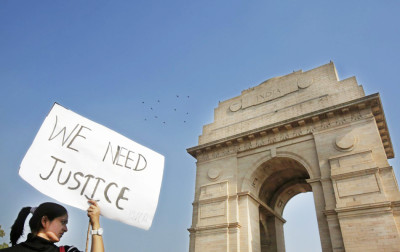
The brutal rape and assault that took place on December 16,2012, triggered massive nationwide protests and almost paralysed parts of New Delhi a few days ago. Large number of students, mostly women, took out protest marches braving water cannons and lathis. As the news of the girl’s death spread today, a worried Delhi administration, eager to ensure that anti-rape protesters did not catch them by surprise, stepped up security and blocked public access to sensitive areas of the national capital.

According to the Mount Elizabeth hospital hospital, despite all efforts by a team of eight specialists to keep her alive and stable, her condition continued to deteriorate and she suffered from severe organ failure following serious injuries to her body and brain.

“She was courageous in fighting for her life for so long against the odds but the trauma to her body was too severe for her to overcome,” Dr Kelvin Loh, CEO of the hospital said.

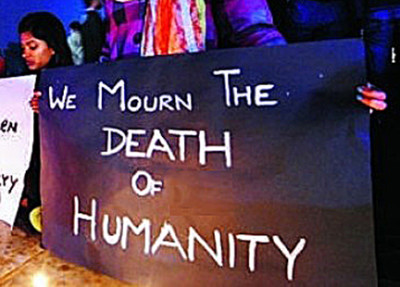
Meanwhile, women’s organisations have called for a silent march in memory of the young victim across the country. In Delhi, mourners will start at 1.30 pm and walk from Mandi House to Jantar Mantar. A silent protest will take place at Shivaji Park in Mumbai on Saturday at 2 pm. In Bangalore, a night vigil will be held. Mourners will walk from Ramakrishna Ashram in Basavanagudi to Jayanagar 4th Block starting at 6 pm to protest, remember and mourn rape victims/survivors. In Kochi, a protest march will be held from Kaloor to the high court at 6pm.

Many individuals and groups have called for candle light vigils demanding a violence-free world.

India Ranked Worst G20 Country for Women

Indian women status

Gender experts responding to a global poll rank India as the worst for women among the G-20 countries

By Team FI

India has been ranked the worst country for women, amongst the G20, by a global poll conducted by Trust Law, a legal news service run by Thomson Reuters Foundation. Trust Law asked 370 gender experts from 63 countries – mainly aid professionals, academics, health workers, policymakers and journalists – to rank the 19 countries of the G20 in terms of the overall best and worst to be a woman in.

The experts opine that the poll shows the grim ground reality of a woman’s life despite the presence of rights granted by the constitution and judiciary laws. The poll has ranked Canada first considering factors like women’s safety, access to health care and education. Germany has landed the second rank, with Britain following. These are followed by Australia, France, United States, Japan, Italy, Argentina, South Korea, Brazil, Turkey, Russia, China, Mexico, South Africa, Indonesia, and Saudi Arabia and in the 19th position is India. The EU, which is a member of the G20 as an economic grouping along with several of its constituent countries, was not included in the survey.

While the poll was based on perceptions and not statistics, U.N. data supports the experts’ views. According to the UN Population Fund, India recorded 56,000 maternal deaths in 2010, perhaps an outcome of diminishing public health care system in India. According to a study by  International Center for Research on Women (2010) 44.5% girls were married before 19 years of age. UNICEF’s Global Report Card on Adolescents 2012, reveals that 57% adolescent boys and 53% of girls in India think it is justifiable for a man to beat his wife.

G20 Women status map

Courtesy: Thomson Reuters Foundation

In Saudi Arabia, factors like – women are not allowed to drive, women were given limited voting right only last year, 64.6% women with tertiary education are unemployed, the fact that the law against violence against women lacks teeth because a man’s testimony is worth that of two women in court – placed the oil rich country as the second worst. China which has one of the highest male to female sex ratios at birth is ranked 14, just below Russia. According to the 2008 World Bank report, in China, with a culture that prefers boys over girls, 1.09 million girls dead or missing at birth due to infanticide.

However, the poll has been criticized by some stating that it promoted popular but inaccurate perceptions. Dr. Kathleen Lahey, of the Queen’s University, Canada, points out that the countries of Germany, Argentina, Australia and Brazil have a woman as a head of state or prime minister and therefore they are perceived to be a progressive society. She points out however that in Germany, only 12.5% board members of publicly listed companies are women and there is 21.6 % gender pay gap for full time workers while in Brazil, only 9 per cent of MPs are women.

The Trust Law poll has ranked the United States in sixth place overall. The increasing number of women who have no access to affordable health care and the recently reignited reproductive rights debate placed US below other western countries like Germany, UK, France, and Australia. Terry O’Neill, president of the Washington-based National Organization for Women, is surprised that US has got the sixth place pointing out to the Globe and Mail that the U.S. is one of only seven countries that haven’t ratified the UN’s Convention on the Elimination of All Forms of Discrimination against Women.

The G-20, which refers to the informal group of 20 major economies in the world – 19 countries plus the European Union, is all set for its annual summit being held this year in Mexico on June 18-19. The poll which precedes the summit has experts opine that it is more vital than ever to protect women’s freedoms at a time of political upheaval in several parts of the world.  “Times of political transition, we’ve learned the hard way, can also be times of fragility, and when rights for women and girls can be rolled back instead of advanced,” says Minky Worden, director of global initiatives at Human Rights Watch.


Delhiites March in Protest Against Rape

Delhi protest by activists

Individuals and activists from women’s groups, disability groups, and civil rights movements marched in Delhi NCR in a protest against rape

By Team FI

United under the banner of Citizen’s Collective Against Sexual Assault, about 350 people from across Delhi, Gurgaon and Noida, marched from Mandi House to Jantar Mantar on 5th May, 2012, to protest against rape and the negligent and insensitive responses of authorities. “Stop Rapes and Make Delhi NCR a Safer Place for Women” was the message that was delivered to the public and police authorities.

The protesters intended to march from Mandi House to the ITO but the permission was withdrawn by the Delhi Police. The march had to be rerouted to Jantar Mantar. “No, you cannot protest on the streets” – this is the response that members of the Citizens’ Collective got when they went for police permission to the Parliament Street police station a few days ago. Obviously, our ‘duty bearers’ today are absolutely fine with women being raped and sexually assaulted on the streets, but they are not okay with people protesting this. This is the grim reality in Delhi NCR today, “ stated the press release from the Citizens Collective.

The protesters were from women’s groups (including Action India, AIDWA, AIPWA, Jagori, Nirantar, PLD, Saheli, Sama, Stree Adhikar Sangathan), disability groups (The Deaf Way Foundation, Noida Deaf Society, National Association of the Deaf), youth groups (Must Bol and YP Foundation), representatives from other movements (NAPM, NTUI, students groups/unions), citizen groups like Gurgaon Girlcott and residents from across the NCR. The march also attracted passers-by who joined the protesters.

The marchers, most of them dressed in red, carrying banners that read Nazar Teri Buri Aur Parda Mein Karoon?’ and ‘Don’t tell me how to dress, tell them not to rape,’  gathered at Jantar Mantar. The next three hours saw slogans shouted, songs of protest, speeches and a performance of ‘Dastak’ (a nukkad-natak/play by Arvind Gaur’s theatre group Asmita).

”According to media reports, Delhi Police says a woman is raped every 18 hours and molested every 14 hours in Delhi. Delhi Commissioner of Police, B K Gupta accepts that not all rape cases get reported,” stated the press release issued by the organizers. The rally ended with the Joint Commissioner of Police Taj Hussain being presented with a memorandum in the absence of the Delhi Commissioner of Police. JCP Taj promised to follow-up on the demands.  Similar memorandums would be submitted to the Gurgaon and Noida Commissioners of Police.

The Memorandum

The Commissioners of Police (Delhi, Gurgaon and Noida) must publicly condemn the statements made by their respective colleagues. They must clearly convey zero-tolerance of anti-women and gender-insensitive attitudes of their forces. Strict action should be taken against police personnel for making such statements/letting such attitudes affect the course of justice.

All state agencies must stop blaming the victim and shift the responsibility onto the state agencies mandated to protect women’s rights. We demand respect and dignity of all women.

Standard Operating Procedures (SOP) for sexual assault cases (including sexual harassment in public places, domestic violence and rape) must be made available in the public domain so that all citizens are aware of their rights under such circumstances. This information would include the procedures for helpline, PCR, as well as walk-in cases.

There must be 100% response to calls by women and on behalf of the women in distress.

The Police forces must ensure effective and timely response from Delhi Police helplines like 100, 1091, 1096, and other helplines in Gurgaon and Noida. Mechanisms to regularly monitor calls and the subsequent responses should be put to immediate effect.

Immediate and sustainable preventive mechanisms should be designed and adopted by all police forces for coordinated action across state borders.

Police officers should demonstrate greater sensitivity towards all women and girls, and undergo periodic gender training and follow gender sensitive normative standards.